College of Education and Human Development

Department of Educational Psychology

Graduate programs in quantitative methods in education

Solve problems in education through research

Earn your master's, PhD, or minor in quantitative methods in education, studying educational statistics and measurement.

95% of students

have received funding in the last five years

#8 in the U.S.

according to U.S. News & World Report

$26.6 million

of secured faculty funding in the past 10 years

Find your path

Choose the tab below that best describes your experience or interests.

    Master's in quantitative methods in education (MA)

    The master's in quantitative methods in education (MA) program provides students with a strong foundation in research methods, statistics, and educational measurement. Through a carefully designed sequence of coursework in quantitative and psychometric methods, students gain the theoretical knowledge and practical skills necessary to design, conduct, and interpret educational research.

    Doctorate in quantitative methods in education (PhD)

    The doctorate in quantitative methods in education (PhD) program focuses on the development of advanced methods in statistics and measurement.

    • Engage in the impactful science and practice of educational measurement and statistics.
    • Gain a solid foundation in coursework related to statistics, educational measurement, and research methods.
    • Work with faculty with supportive mentorship and cutting-edge expertise to become a rising star in academia or industry.

    Minor in educational psychology with an emphasis in quantitative methods in education

    The Department of Educational Psychology offers a minor in educational psychology with an emphasis in quantitative methods in education.

    Request information

    Info session recap

    Review slides from a recent quantitative methods in education information session.

    Asset reference

    What our students say

    Quote from Rik Lamm, PhD '23

    Rik Lamm

    My background in the QME program has equipped me with the skills necessary for my current role as a Research, Evaluation, and Assessment Scientist for Bloomington Public Schools. These include developing non-cognitive surveys such as student climate surveys and parent engagement surveys, as well as analyzing data from academic assessments such as the MCAs. Additionally, QME has equipped me with the skills to interpret complex data in order to predict longitudinal trends. This ability leads to the development of research-driven strategies that benefit both students and teachers.

    Rik Lamm, PhD '23 Research, Evaluation, and Assessment Scientist Bloomington Public Schools

    Faculty

    Get to know our award-winning faculty with practical and research experience in this area.
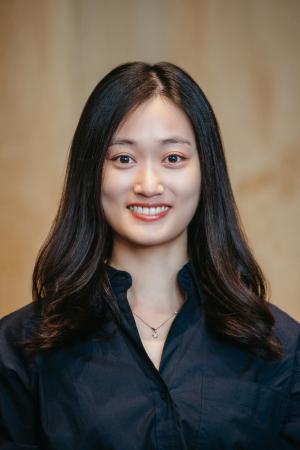
      Nana Kim Nana Kim

      My interests lie in the development and application of statistical models with the goal of better understanding how students/respondents interact with test items and consequently improving the measurement of psychological and cognitive constructs.

      Image
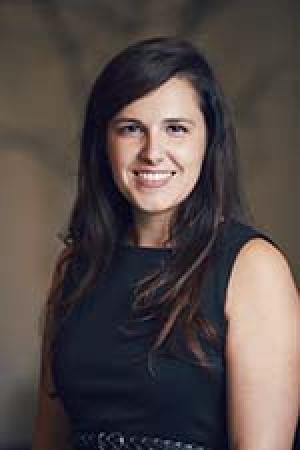
      Dr. Nana Kim headshot

      Nidhi Kohli Nidhi Kohli

      • QME Program Coordinator, Professor, and Royal and Virginia Anderson Professor of Quantitative Methods in Education
      • 612-624-9001
      • nkohli@umn.edu

      I am passionate about advancing both the science and application of educational statistics. My research focuses on developing and refining advanced statistical methodologies to analyze complex longitudinal data.

      Asset reference
      Nidhi Kohli

      Chelsey Legacy Chelsey Legacy

      My research interests are in teaching and learning statistics. In particular, I study multivariate thinking, visualization, and computing in statistics and data science courses.

      Image
      Dr. Chelsey Legacy headshot

      Haoran Li Haoran Li

      I am currently accepting doctoral students in the Quantitative Methods in Education (QME) program.

      Image
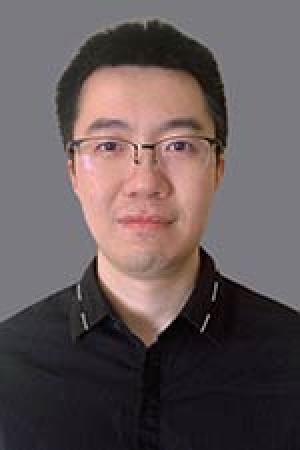
      Dr. Haoran Li headshot

      Suzanne Loch Suzanne Loch

      My courses are well thought out and purposefully designed, incorporating activities that facilitate multiple ways to engage with the content. I am organized, respectful of students' time and happy to answer questions inside and outside of class.

      Image
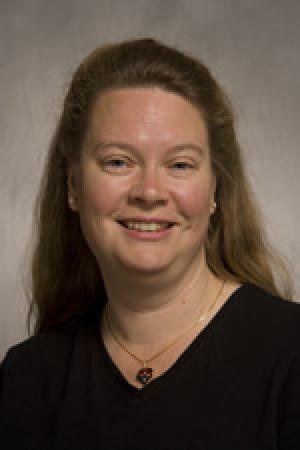
      Dr. Suzanne Loch headshot

      Yikai (EK) Lu Yikai (EK) Lu

      My research interests include latent variable modeling for innovative item types and applications of machine learning, deep learning, and LLM for psychological and educational data.

      Asset reference
      Yikai (EK) Lu

      Wenchao Ma Wenchao Ma

      • Associate professor, the American Guidance Service Inc. and John P. Yackel Professor in Educational Assessment and Measurement
      • He, him
      • wma@umn.edu

      My research centers on the development of innovative psychometric methods to enhance measurement practices in education and psychology, along with the application of measurement techniques to survey and scale development and validation.

      Image
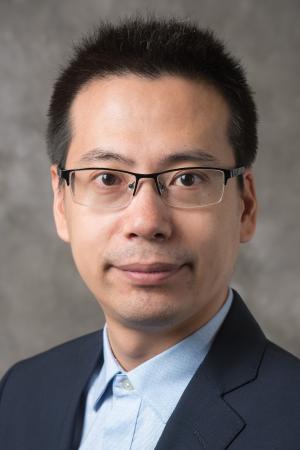
      Dr. Wenchao Ma headshot

      Michael Rodriguez Michael Rodriguez

      • CEHD Dean; Campbell Leadership Chair in Education and Human Development; professor
      • 612-624-5761
      • mcrdz@umn.edu

      Michael C. Rodriguez is Dean of CEHD and a professor of measurement. He joined the UMN faculty in 1999 and in 2013 was named the Campbell Leadership Chair in Education and Human Development.

      Image
      CEHD Dean Michael C. Rodriguez headshot

      Andrew Zieffler Andrew Zieffler

      My research interests are in the teaching and learning of statistics and data science. I am also interested in measurement and assessment as it relates to statistics education and data science research.

      Image
      Dr. Andrew Zieffler headshot
      Please configure this component to see content.

      Program affiliates

      Adam Rothman

      Associate professor, School of Statistics

      Contact us

      We’re here to help. Contact us, and a member of our department will be in touch.