College of Education and Human Development

Department of Educational Psychology

Master's in quantitative methods in education (MA)

Earn your master's in quantitative methods in education. Prepare for careers in educational data analysis, research, and psychometrics.

95% of students

funded in the last five years

#8 in the U.S.

according to U.S. News & World Report rankings

$26.6 million

of secured faculty funding in the past 10 years

Start your journey

    Design, conduct, and interpret educational research with a master's in quantitative methods in education

    The master's in quantitative methods in education (MA) program provides a strong foundation in educational statistics, research methods, and measurement. Coursework focuses on quantitative and psychometric methods, giving you the practical skills to design, conduct, and interpret educational research.

    Program highlights

    Independent research: Complete an applied or methodological research project paper that applies statistical methods to real-world, data-driven problems.

    Community-engaged research: You have the option to partner with community stakeholders, such as school districts or nonprofits, to address real-world educational challenges.

    Careers

    • Test publishing firms
    • Research and evaluation centers
    • Public school systems
    • State departments of instruction
    • Private industry

    How to apply

    Application deadlines

    Submit your application for the fall semester following the deadlines below. Note the dates are the same for both MA and PhD applicants.

    December 1

    To be considered for fellowships and departmental financial assistance, application materials must be submitted to the program and the Graduate School by the December 1 deadline. 

    March 1

    If you're not seeking a fellowship or departmental financial aid, you have until March 1 to submit your application materials.

    Tuition and funding

    The QME program strives to provide funding opportunities to all incoming students. While we can’t typically guarantee funding, over the last five years, we have been able to fund over 95% of our students that were looking for funding (including our MA students)!

    Tuition

    Visit the College of Education and Human Development's finance and funding page for information on tuition.

    Fellowships and awards

    Submit your application materials by the December 1 deadline, and you’ll automatically be considered for Graduate School fellowships and departmental awards based on scholastic achievement. Notification of awards will be sent in March.

    Note: Spring, summer, and fall (March deadline) applicants will not qualify for fellowships.

    Graduate assistantships

    Get paid to work as a teaching assistant, graduate instructor or research assistant. Graduate assistantships are available through the department, College of Education and Human Development, and the University.

    Note: Applicants who complete their applications by the March 1 deadline will be less likely to receive graduate assistantships than students who meet the December 1 deadline.

    Additional funding

    Visit the College of Education and Human Development's finance and funding page for more information on funding.

    Financial aid

    Visit OneStop Student Services for more information on available financial aid.

    Request information

    Info session recap

    Review slides from a recent quantitative methods in education information session.

    Asset reference

    Coursework

    Visit the graduate program catalog for more information on the master's in quantitative methods in education (MA) curriculum (33 credits).

      EPSY 5221 Principles of Educational and Psychological Measurement
      EPSY 5224 Survey Design, Sampling, and Implementation
      EPSY 8226 Applications of Item Response Theory Models
      ESPY 8265 Factor Analysis
      EPSY 8251 Statistical Methods in Education I 
      EPSY 8252 Statistical Methods in Education II
      EPSY 8266 Statistical Analysis Using Structural Equation Methods
      EPSY 8264 Advanced Multiple Regression Analysis 
      EPSY 8282 Statistical Analysis of Longitudinal Data

      Faculty

      Get to know our award-winning faculty with practical and research experience in this area.
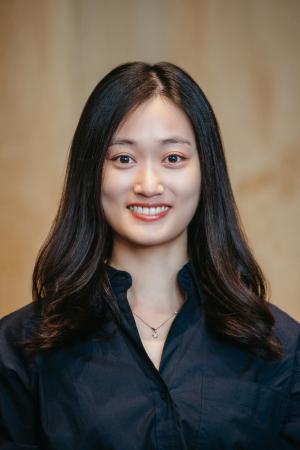
        Nana Kim Nana Kim

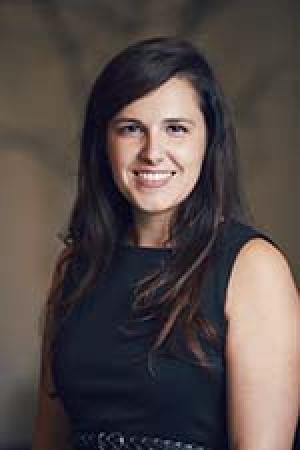
        My interests lie in the development and application of statistical models with the goal of better understanding how students/respondents interact with test items and consequently improving the measurement of psychological and cognitive constructs.

        Image
        Dr. Nana Kim headshot

        Nidhi Kohli Nidhi Kohli

        • QME Program Coordinator, Professor, and Royal and Virginia Anderson Professor of Quantitative Methods in Education
        • 612-624-9001
        • nkohli@umn.edu

        I am passionate about advancing both the science and application of educational statistics. My research focuses on developing and refining advanced statistical methodologies to analyze complex longitudinal data.

        Asset reference
        Nidhi Kohli

        Chelsey Legacy Chelsey Legacy

        My research interests are in teaching and learning statistics. In particular, I study multivariate thinking, visualization, and computing in statistics and data science courses.

        Image
        Dr. Chelsey Legacy headshot

        Haoran Li Haoran Li

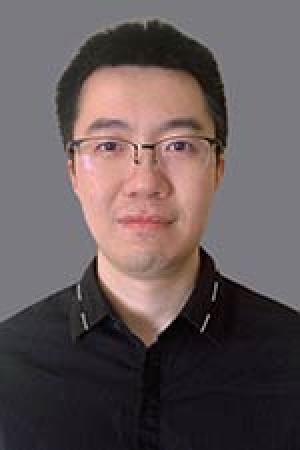
        I am currently accepting doctoral students in the Quantitative Methods in Education (QME) program.

        Image
        Dr. Haoran Li headshot

        Suzanne Loch Suzanne Loch

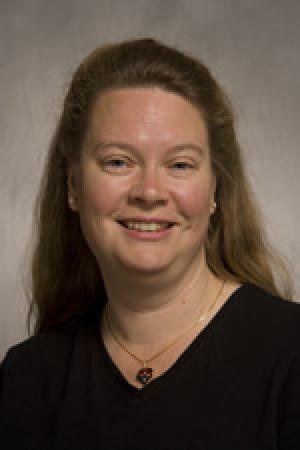
        My courses are well thought out and purposefully designed, incorporating activities that facilitate multiple ways to engage with the content. I am organized, respectful of students' time and happy to answer questions inside and outside of class.

        Image
        Dr. Suzanne Loch headshot

        Yikai (EK) Lu Yikai (EK) Lu

        My research interests include latent variable modeling for innovative item types and applications of machine learning, deep learning, and LLM for psychological and educational data.

        Asset reference
        Yikai (EK) Lu

        Wenchao Ma Wenchao Ma

        • Associate professor, the American Guidance Service Inc. and John P. Yackel Professor in Educational Assessment and Measurement
        • He, him
        • wma@umn.edu

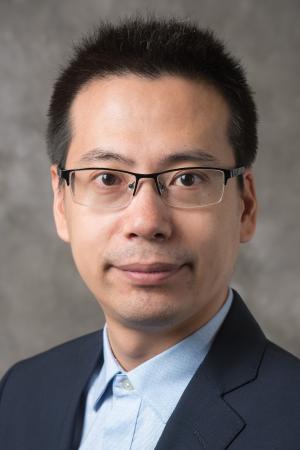
        My research centers on the development of innovative psychometric methods to enhance measurement practices in education and psychology, along with the application of measurement techniques to survey and scale development and validation.

        Image
        Dr. Wenchao Ma headshot

        Michael Rodriguez Michael Rodriguez

        • CEHD Dean; Campbell Leadership Chair in Education and Human Development; professor
        • 612-624-5761
        • mcrdz@umn.edu

        Michael C. Rodriguez is Dean of CEHD and a professor of measurement. He joined the UMN faculty in 1999 and in 2013 was named the Campbell Leadership Chair in Education and Human Development.

        Image
        CEHD Dean Michael C. Rodriguez headshot

        Andrew Zieffler Andrew Zieffler

        My research interests are in the teaching and learning of statistics and data science. I am also interested in measurement and assessment as it relates to statistics education and data science research.

        Image
        Dr. Andrew Zieffler headshot
        Please configure this component to see content.

        Program affiliates

        Adam Rothman

        Associate professor, School of Statistics

        Contact us

        We’re here to help. Contact us, and a member of our department will be in touch.