College of Education and Human Development

Department of Educational Psychology

Bachelor of science (BS) in special education with licensure in early childhood special education

This program prepares you to obtain a teaching license in early childhood special education.

Please note: We are pausing admissions into the ECSE program while we explore partnerships and possible restructuring for future delivery. This decision is part of our ongoing efforts to ensure the long-term sustainability of our programs.

100% job placement

after licensure

96% pass rate

on edTPA

100% satisfaction

with quality of courses

Start your journey

    Earn your degree and licensure in just four years through flexible in-person and online course options.

    Please note: We are pausing admissions into the ECSE program while we explore partnerships and possible restructuring for future delivery. This decision is part of our ongoing efforts to ensure the long-term sustainability of our programs.

    This program prepares you for an initial teaching license in ECSE. Establish the skills necessary to support the development of young children, birth through age six, with a wide range of delays/disabilities (motor delays, speech or language impairments, autism spectrum disorders, emotional or behavioral disorders, low birth weight, chromosomal abnormalities, etc.).

    In order to be recommended for your Minnesota B-age 6 ECSE license, you must successfully complete these licensure requirements mandated by the state of Minnesota.

    Careers

    • Early interventionist for infants and toddlers in home and community settings
    • Special education teacher in preschool classrooms
    • Screening and evaluation team member

    Tuition and funding

    Tuition

    Visit the College of Education and Human Development's Tuition and Financial Aid page for information on tuition..

    Financial aid

    North Star Promise (NSP) Scholarship Program
    The NSP Scholarship program is a tuition and fee-free pathway to higher education for Minnesota residents with a family income under $80,000. Eligible undergraduates at the University of Minnesota will receive full coverage for the balance of tuition and fees remaining after other scholarships, grants, stipends and tuition waivers have been applied.

    Minnesota Aspiring Teachers of Color Scholarship Pilot Program
    Minnesota Aspiring Teachers of Color Scholarship Pilot Program provides post-secondary financial assistance to eligible undergraduate and graduate students who are preparing to become teachers, have demonstrated financial need, and belong to racial or ethnic groups underrepresented in the state’s teacher workforce.

    Scholarships and awards through school districts for their employees

    Ask your employer if they have funding to support your education.

    Special Education Teacher Pathway Program. If you are working as an educational assistant or paraprofessional in the state of Minnesota, you may be eligible to receive funding from your school district to cover some or all of the cost of your licensure program. Please check with your employer to see if you can access their Special Education Teacher Pipeline Funding.

    Grow Your Own Program is similar to the Pathway program, but is not limited to special education and often includes a focus on diversifying the teacher workforce.

    Come Teach in Minnesota allows school districts to offer hiring and retention bonuses to eligible individuals when they move to Minnesota and enroll in a teacher preparation program

    TEACH Grants

    TEACH Grants are part of a federal program to provide financial support to students who will teach in a high need area at a low-income school for at least four years. Application information is available from Onestop on their grants and waivers page.

    Scholarships and awards through the University

    Special education scholarships, fellowships, and awards

    Incoming first-year students who are interested in special education are automatically considered for the Campbell Scholarship for Education. Visit the Office of Admissions scholarships page for more information on this and additional CEHD scholarships available to incoming first-year students.

    Learn more about teaching scholarships available to undergraduates in the College of Education and Human Development.

    Request information

    Coursework

    Gain experience working with infants, toddlers, and preschoolers with delays/disabilities in a variety of settings through required field experiences at a program or school in your community each semester.

    Program plans will likely vary for transfer students (i.e, those who have already completed some college credits, including those with a two-year degree). We are happy to provide you with an individualized program plan based on your transcripts.

    Faculty

    Get to know our award-winning faculty with practical and research experience in this area.
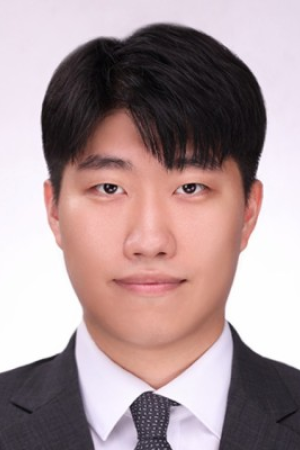
      Jechun An Jechun An

      I serve as a Post-Doctoral Associate (Mentors: Drs. Sam Choo and Kristen McMaster ) at the Department of Educational Psychology.

      Image
      Dr. Jechun An

      M. Y. Savana Bak M. Y. Savana Bak

      My current research focuses on 1) social communication interventions for autistic children using multi-mode language data from the children’s natural environment and 2) supporting communities to advocate for culturally responsive interventions.

      Image
      Dr. M. Y. Savana Bak headshot

      Sam Choo Sam Choo

      My research focuses on leveraging technology to support teachers in more effectively teaching mathematics for their students with or at risk for learning disabilities.

      Image
      Dr. Sam Choo headshot

      Anne Foegen Anne Foegen

      My research explores the development and implementation of brief assessments in mathematics that can be used to monitor student progress.

      Image
      Dr. Anne Foegen headshot

      Debbie Golos Debbie Golos

      Personal Statement: I recognize the privilege I hold but did not earn through my race, socioeconomic status, hearing level, and education.

      Image
      Dr. Debbie Golos headshot

      Robert Henery Robert Henery

      I coordinate the program for the Emotional Behavioral Disorders (EBD) license in special education. I teach a variety of courses, generally focused around applied behavior analysis or behavior interventions in schools.

      Image
      Dr. Robert Henery headshot

      Amy Hewitt Amy Hewitt

      Amy Hewitt has a background and work history in the field of intellectual and developmental disabilities and has worked in many positions to improve community inclusion and quality of life for children and adults with disabilities and their families.

      Image
      Dr. Amy Hewitt headshot

      LeAnne Johnson LeAnne Johnson

      • Department chair; professor; co-program coordinator, special education
      • 612-626-3457
      • leannej@umn.edu

      My research interests are intervention-oriented with a focus on improving outcomes for a range of preschool and elementary school-aged children who are at high risk given social, emotional, behavioral, and communication needs.

      Image
      Dr. LeAnne Johnson headshot

      Rebecca Kolb Rebecca Kolb

      In my current position I’m a lecturer in the special education department that teaches primarily within the MA in ABA course sequence. In addition to teaching, I serve as the fieldwork coordinator and program coordinator for the MA in ABA program.

      Image
      Dr. Rebecca Kolb headshot

      Brynn Kraning Brynn Kraning

      I strive to train compassionate and mindful students who are to become highly qualified teachers of Deaf and Hard of Hearing children who represent culturally, linguistically, and racially diverse backgrounds.

      Image
      Dr. Brynn Kraning headshot

      Amy Kunkel Amy Kunkel

      • Assistant teaching professor; coordinator, special education licensure; ABS licensure program lead
      • hear0045@umn.edu

      I serve as the licensure coordinator for the Special Education Program in the Department of Educational Psychology. I am also the Licensure Program Lead for the Academic Behavior Strategist (ABS) license in Special Education.

      Image
      Dr. Amy Kunkel headshot

      Jennifer McComas Jennifer McComas

      • Rodney S. Wallace Professor for the Advancement of Teaching and Learning
      • 612-624-5854
      • jmccomas@umn.edu

      Principal Investigator, Developing an Intervention Model for Complex Communication Needs in Rett Syndrome.

      Image
      Dr. Jennifer McComas headshot

      Kristen McMaster Kristen McMaster

      • Assistant Dean for Research, CEHD; Guy Bond Chair in Reading
      • 612-624-1859
      • mcmas004@umn.edu

      My empirical work aims to bridge research and practice and leveraging our (researchers’ and practitioners’) collective expertise to address those issues.

      Image
      Dr. Kristen McMaster headshot

      Charissa O'Neill Charissa O'Neill

      • Field placement coordinator, special education; teaching specialist
      • 612-626-7638
      • coneill@umn.edu

      Charissa O’Neill is the Field Placement Coordinator for the Special Education Program. In this role, she coordinates both student teaching and practicum experiences for students.

      Image
      Charissa O'Neill headshot

      Laura Paczkowski Laura Paczkowski

      Hello all! My name is Laura, and I am the academic advisor for the special education program. I received my master's of science in college counseling and student affairs from Minnesota State University Moorhead.

      Image
      Laura Paczkowski headshot

      Brenna Rudolph Brenna Rudolph

      • Senior lecturer, early childhood special education (ECSE) licensure program lead
      • 612-624-3125
      • nolan225@umn.edu

      I am the coordinator of the early childhood special education (ECSE) licensure program .

      Image
      Dr. Brenna Rudolph headshot

      Kathy Seifert Kathy Seifert

      I am the coordinator of the learning disabilities licensure program in special education.

      Image
      Dr. Kathy Seifert headshot

      Frank Symons Frank Symons

      • Interim Dean, CEHD; Distinguished McKnight University Professor
      • 612-626-8697
      • symon007@umn.edu

      My research emphasis is on understanding the severe behavior problems of children and adults with special needs, primarily those with developmental disabilities and emotional or behavioral disorders.

      Image
      Symons headshot

      Jason Wolff Jason Wolff

      • William Harris Professor in Child Development, professor, director of graduate studies
      • 612-625-4166
      • jjwolff@umn.edu

      How do we optimally support young children with autism and related developmental disabilities? My approach to this overarching question is based on the rationale that understanding the origins of such behaviors, how they emerge from the interplay of…

      Image
      Dr. Jason Wolff headshot
      Please configure this component to see content.

      Contact us

      We’re here to help. Contact us, and a member of our department will be in touch.

      Opens in a new window