College of Education and Human Development

Department of Educational Psychology

Master of arts (MA) in psychological foundations of education

Make improvements in education through psychology, science, and technology.

33-34

credits

Careers

in research and technology

Feb. 1

deadline to apply

Start your journey

    Study the psychological processes critical to education

    Research in our program focuses on education technology and cognitive development, including high-level cognition and factors shaping and enhancing learning throughout the lifespan. Our faculty and students explore the basic mechanisms of thinking and learning in academic disciplines through precise, controlled laboratory experiments. We also put our research to work—in local schools on programs to improve students' reading, science, and mathematics outcomes as well as informal learning environments.

    Careers

    • Research associates at universities
    • Research scientists at companies
    • Researchers in government agencies, research/technology development centers, other educational settings

    How to apply

    Admissions deadline

    Submit your application by February 1. 

    Tuition and funding

    Tuition

    Visit the College of Education and Human Development's finance and funding page for information on tuition.

    CEHD Fellowships, scholarships, assistantships, and grants for graduate students

    As a graduate student in CEHD, you may be eligible for fellowships, grants, and scholarships from the University of Minnesota, from our college, and from your academic department. Check this link out to get more information on funding opportunities!

    Visit the College of Education and Human Development's finance and funding page for more information on funding.

    Financial aid

    Financial aid for your graduate program works differently than financial aid at the undergraduate level. It’s important to know the differences and explore your options. Visit this One Stop link for more information on available financial aid.

    Request information

    Coursework

    Coursework includes: 

    • Cognitive and learning processes
    • Scientific reasoning
    • Mathematical thinking
    • Reading comprehension
    • Narrative text comprehension
    • Creativity and intelligence
    • Socio-scientific misconceptions and biases
    • Development and use of educational technology
    • Lab-, classroom-, and community-based research
      (A master's degree is not required to apply for the doctoral program.)

    Faculty

    Get to know our award-winning faculty with practical and research experience in this area.
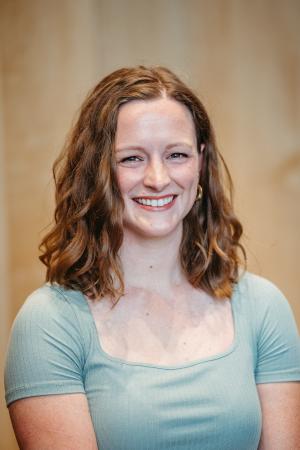
      Laura Allen Laura Allen

      • Bonnie Westby Huebner Endowed Chair in Education and Technology, director of undergraduate studies, associate professor
      • she, her, hers
      • lallen@umn.edu

      My research seeks to understand how individuals most effectively learn and communicate information through text and discourse.

      Image
      Laura Allen headshot

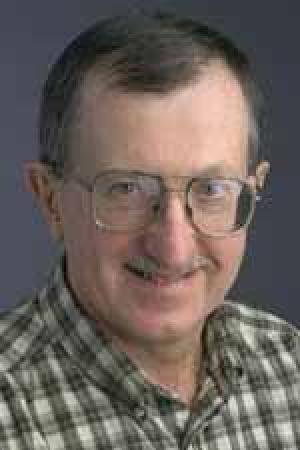
      William Bart William Bart

      My years in the graduate program in measurement, evaluation, and statistical analysis at the University of Chicago allowed me to study with scholars such as Benjamin S. Bloom, R. Darrell Bock, and Benjamin Wright.

      Image
      Dr. William Bart headshot

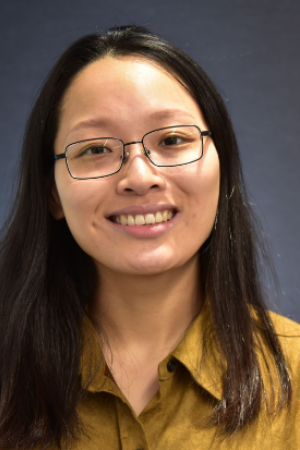
      Heeryung Choi Heeryung Choi

      As a learning analytics researcher, I am committed to fostering self-regulated learning (SRL) skills, with and within technology.

      Image
      Dr. Heeryung Choi headshot

      David DeLiema David DeLiema

      • Program coordinator, psychological foundations of education; McKnight Presidential Fellow; associate professor
      • he, him, his
      • 612-301-2734
      • ddeliema@umn.edu

      My research emphasis is on how students and teachers collaboratively navigate moments of failure when learning computer science, mathematics, and science.

      Image
      David DeLiema headshot

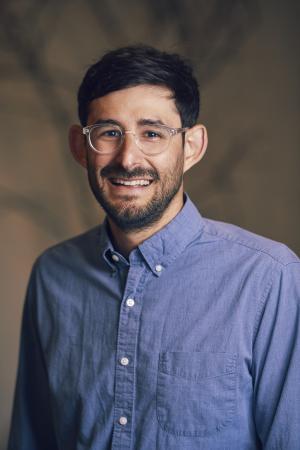
      Stephen Hutt Stephen Hutt

      Stephen Hutt develops theory-informed learning analytics and AI that connect research on metacognition and self-regulation to the design of equitable, adaptive learning technologies.

      Asset reference
      Stephen Hutt

      HyeJin Hwang HyeJin Hwang

      HyeJin Hwang's research interests revolve around reading comprehension and content learning (science, social studies) in K-12 settings, especially for multilingual students. Hwang, H. (September 8, 2021).

      Image
      Dr. Hyejin Hwang headshot

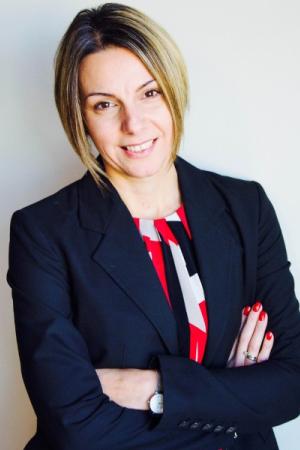
      Panayiota (Pani) Kendeou Panayiota (Pani) Kendeou

      • Distinguished McKnight University Professor, Guy Bond Chair in Reading
      • she, her, hers
      • 612-626-7814
      • kend0040@umn.edu

      Dr. Kendeou is driven to understand and improve reading comprehension and learning with AI, while also identifying conditions that can reduce the impact of misinformation and misconceptions in our information ecosystem.

      Image
      Dr. Panayiota (Pani) Kendeou headshot

      Caitlin Mills Caitlin Mills

      I joined the Department of Educational Psychology at the University of Minnesota in 2022, after spending four years in the Psychology Department at the University of New Hampshire.

      Image
      Dr. Caitlin Mills headshot

      Martin Van Boekel Martin Van Boekel

      My role is the teaching and mentorship of students. My research interests focus on ways of uplifting trans* people's voices. A second line of research explores the feedback process, investigating ways of enhancing students' use of feedback.

      Asset reference
      Martin Van Boekel

      Keisha Varma Keisha Varma

      • Associate professor and Office of Equity and Diversity associate vice provost
      • 612-626-8991
      • keisha@umn.edu

      My work on scientific reasoning and science learning is classroom-based research that explores ways to enhance middle school students' science learning by supporting their scientific reasoning skills.

      Image
      Dr. Keisha Varma headshot
      Please configure this component to see content.

      Contact us

      We’re here to help. Contact us, and a member of our department will be in touch.

      Opens in a new window